
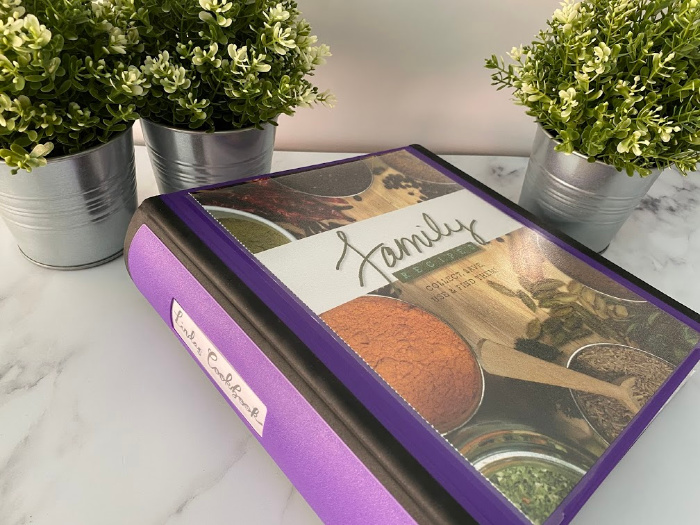
There are two situations regarding recipes that drive me crazy. One is finding a really good recipe and then you have nowhere to put it. The other is wanting to prepare a special recipe item for dinner, but then you have trouble finding it. I’ve been trying to store recipes for years. There comes a time when you need to put a day or two aside and just spend time organizing your favorite recipes.
I think it’s critical that we have printed recipes, my friends. Yes, I love the internet and Pinterest recipes that are so delicious to look at and then make. But if we don’t have the internet, or our computer where we store so many files, including recipes, won’t come up, then what?
Since I’ve been collecting recipes forever, I’m going to walk you through some of my favorite organizational steps that I’ve found work really well. Here is how to organize your favorite recipes.
I have four daughters and several granddaughters and I asked them if they wanted a collection of my recipes to add to their stash of recipes. They all gladly said they did. So, I bought 12 binders (3-inch ring binders) and the awesome Recipe Dividers I’ve highlighted below.
Then I bought several boxes of page protectors and we all worked together to share our recipes. I have granddaughters that will want the recipe binders as well. We’ll continue to share recipes with each other as we’re introduced to new ones and as the granddaughters get old enough to want their own “library” of recipes.
How to Organize Your Favorite Recipes
The first step in organizing your favorite recipes is to go through your entire collection. Get rid of what you no longer want. Remember, we’re only organizing the recipes you want to keep.
Organizing your favorite recipes will be a lot easier when you get rid of the junk. Learning how to organize your favorite recipes now will also save you a ton of time later.
1. Print, Use Page Protectors, and Add to Binders
I’m actually in the process of doing this for my kids and grandkids. I firmly believe that my recipes are a legacy that I get to leave behind for my family. Taking the time to print physical pages, then protecting them from moisture and food smudges using page protectors, and then adding them to binders is the way in which I’m choosing to organize my favorite recipes.
I’m also printing all of the recipes from my blog and adding them to the binders, if they weren’t there already. All of my favorite recipes are on my blog, so it only makes sense that I add them to the inventory of recipe pages I want to be saved for future reference.
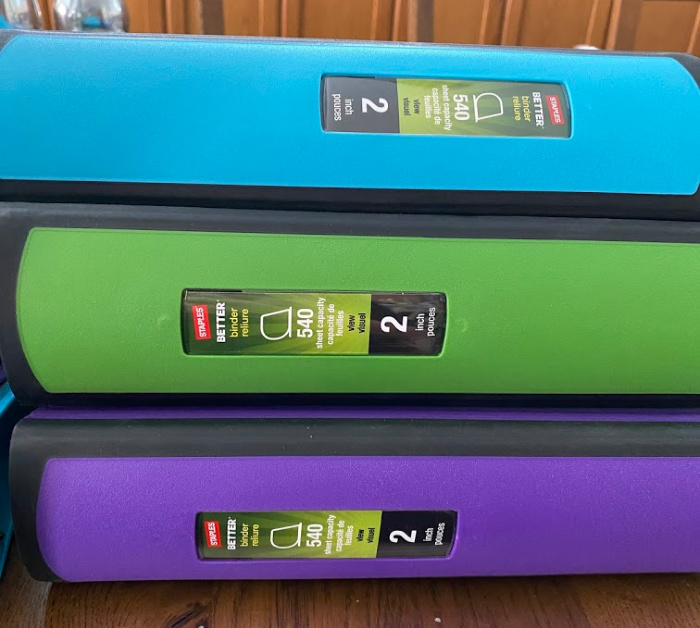
I can bet you guessed what color I want, yep, it’s the purple one. I bought some of the binders at Staples in St. George, Utah. But I also ordered some online 2-Inch Better Binders and found there are many colors to choose from if you have a favorite, or want to sort/organize the recipes in different binders based on what kind of recipe it is.
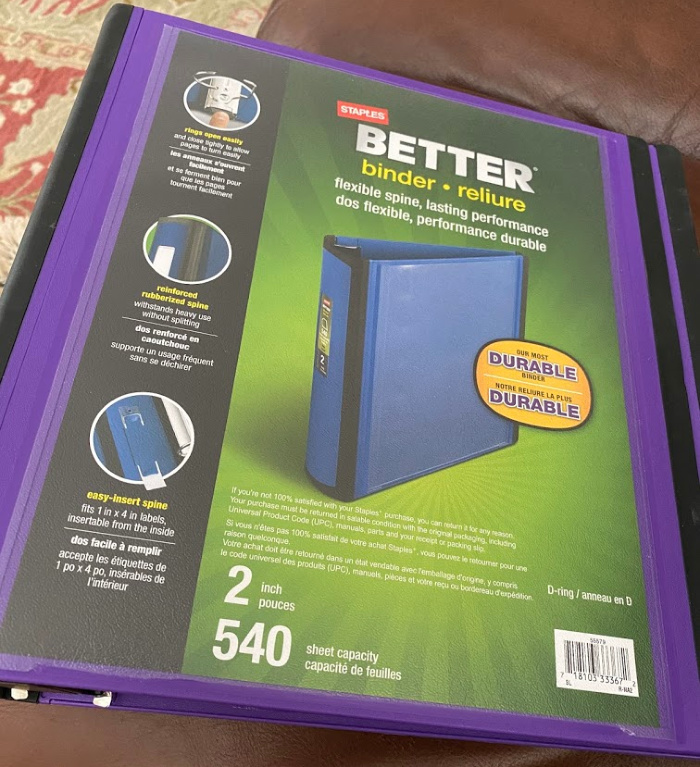
I bought these Page Protectors and these LONG Recipe Dividers ( I LOVE these-you can see the tabs) and I started printing recipes and copying all the recipes we want to save for future family members. I tried to get the page protectors at Costco, but they didn’t have any here in Southern Utah.
2. Write the Recipes on Recipe Cards
It’s important to realize that recipe cards aren’t dead. In fact, they’re still a really awesome way of organizing recipes. Every time you find a recipe that you truly love, don’t be shy about writing it on a recipe card and adding it to your collection.
Recipe cards are popular because they don’t take up a lot of room and they’re super easy to organize. The key is making sure you organize as you go, so you don’t have a huge pile of recipe cards that you don’t know what to do with.
3. Recipe Binders to the Rescue
This is my husband, Mark, helping sort and fill the plastic page protectors. This has been a HUGE job, but it is so worth it. I wish I had done this with my mom and my siblings. As I’ve often mentioned, my mother was an awesome cook. I learned so much from her and she did share many of her recipes with me and my sisters. I wish I had made sure that I had them all.
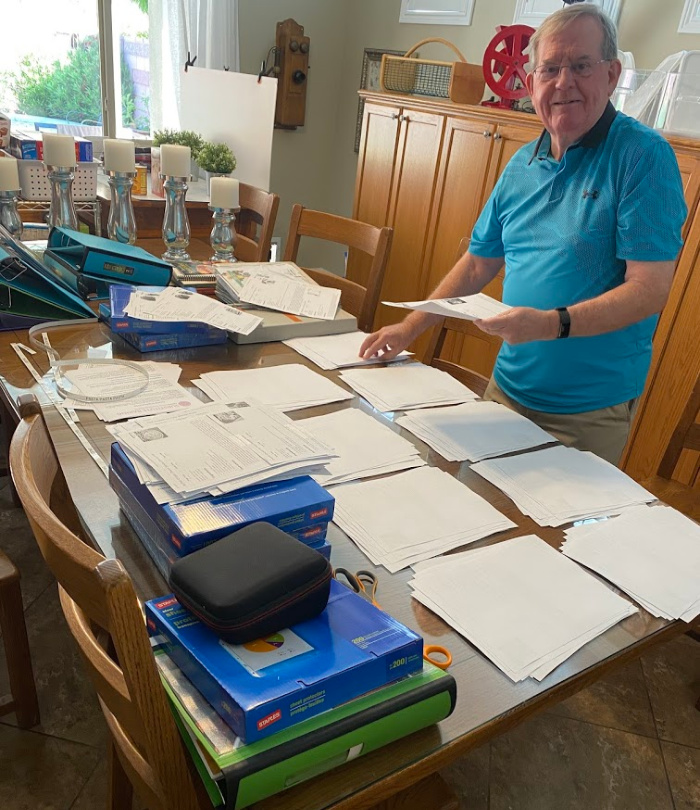
If you do a lot of recipe collecting and need to get super serious about recipe organization, then binders are the way to go. The type of binder organization I’m talking about is organizing each type of recipe in the right section of each binder.
For example, you might put bread recipes into one binder. You might put meat recipes in another binder. Depending on the number of recipes you have, you’ll also be separating the recipes within the binder into sections with dividers. The bread binder is a good example. The dividers may include recipes for white bread, wheat bread, rolls of all kinds, etc. This will REALLY help you to stay organized and on top of it all. It really all depends on how many recipes you want to organize.
4. Recipe Flip Stand
One of my favorite inventions for organizing your favorite recipes is known as a recipe flip stand. This works for your favorite recipes, but not everything. You can easily add the recipes and keep the stand on your counter.
The stand allows you to easily flip to whichever recipe you want to see. Plus, there are 10 tabbed dividers and 24 sheet protectors.
5. Recipe Book
While this may take some time to transfer all of your recipes over, it’ll be worth it in the end. A leather recipe book is perfect for adding all of your favorite recipes for future use. The good thing is, all the recipes can be stored in one book or source. Again, depending on your recipe inventory, one book may not be enough.
Plus, it’s in a safe spot because the recipe book is so sturdy. If you’re just starting to collect recipes, this may be an excellent route to go.
6. Recipe Card Protectors
Sometimes you get the opportunity to get organized and make it easier on yourself. If you already have your favorite recipe cards and just need a way to protect them, grab these recipe card protectors. You can organize your recipes and keep them as protected as you possibly can.
Whether on pages or cards, the actual activity of making a recipe can get messy in any kitchen. If you have them encased in protectors, the mess can be wiped off, just like you do with your countertops.
7. Don’t Forget the Recipe Box
Something that is still very prevalent today is a handy item known as a recipe box. This is where you store all of those recipe cards passed on down from generation to generation.
Recipe boxes can easily be stored in your cabinet or on a shelf. Something like this shouldn’t be forgotten because it truly is such an easy way to organize your favorite recipes.
I hope these 7 tips help you learn how to organize your favorite recipes. You’ll enjoy being able to tackle this project sooner rather than later. What’s your favorite way to organize your recipes?
What are the Best Ways to Organize Recipes?
I think that’s a matter of opinion. It’s nice to know that you can try different organizational methods like the ones I’ve outlined here. Go through each one of these ideas and see what works best for you. You’ll enjoy being able to find an organizational approach that is easy to put together, doesn’t cost too much, and actually prompts you to put things together in an easy to understand and apply basis.
How Do You Organize a Loose Recipe?
Well, if you have a loose recipe, there are several ways that you can organize it. Create a recipe binder, recipe scrapbook, recipe box, or recipe holder. Pick which way you enjoy organizing and go for it.
You Should Consider Categories When it Comes to Organizing Recipes
It might sound funny, but we all tend to organize things differently. You can organize based on the type of food being prepared in the recipe, like sauces, salads, soups, pasta, etc. You can take a slightly different approach and organize by the ingredients included, like veggies, meats, dairy products, and more.
You can also organize based on how you plan to cook or prepare the recipe, such as in the oven, on a grill, in a skillet, in the crock pot, or pressure cooker. There are so many ways to prepare and cook meals, it’s amazing!
Once you decide on the categories, you can have subgroups. If the binder deals with meats, consider having a divided section for red meat, poultry, fish/seafood, and exotic entrees too. Even within the subgroups, you can fine-tune the category into more detail. For example, under the fish/seafood category, you could have trout, shrimp, clams, oysters, bass, catfish, and so many more.
What Are Some Salad Types or Categories?
Salads can be fun and challenging when it comes to organizing recipes. Salads come in so many varieties, like garden, pasta, Ceasar, hot, cold, garlic, meat-based like grilled chicken, and hundreds more. You need to decide how you logically think about things when it comes to meal prep, and put your recipes in a category that you’ll remember.
Should the Category be Based on any Particular Ingredient?
Since most recipes generally fall into a large overall category, oftentimes the major ingredient will determine what subgroup applies. For example, rather than file “egg salad” under a category of recipes made with eggs, you’d probably have it under salads, with a subgroup of salads that include eggs. Again, how you think when organizing should determine how you’ll best find the recipe the next time you want to use it.
Is it too Confusing to Organize Recipes Based on Health or Allergy Concerns?
For those who really try to eat super healthy meals or those with allergy issues, you could have a subgroup that includes recipes that are low in sugar, have more protein, are made with low-carb ingredients, etc. It all depends on how detailed you want to be.
When it comes to cooks or families who try to prepare and eat vegan-oriented meals, the meat and dairy recipes would be pretty sparse or non-existent. You could have a category that is directed towards meal preparation for babies or the elderly too.
Should I Consider Having My Recipes Grouped Based on the Number of People Being Fed?
It has been my experience that recipes geared for family meal preparation are fairly easy to adjust based on the family size, the make-up of ages, and possibly sex since teenage boys tend to eat a whole lot more than their teenage girl peers. You learn through experience how best to adjust for more or fewer servings as you add the ingredients and mix things together.
I’ve had to make some definite changes in many recipes since Mark and I have been on our own. Cooking for two has proven to be more difficult than I’d imagined. When I used to make my bread I’d usually make six or eight loaves, now it’s usually two or three, but it’s all good and the effort worthwhile.
As for meals being prepared for large groups like family reunions and church gatherings, it’s a whole different story. Depending on the recipe, you can try to make adjustments in the volume of the various ingredients, but you may be best served by getting some guidance from those who traditionally or by vocation prepare meals for larger groups.
I Have Some Kids Who Love to Help Me in the Kitchen. What About Recipes for Them?
Depending on their ages, there are tons of recipes that can be prepared by younger cooks. You could even have a category or subgroup with recipes just for them. You might want to start with things like pancakes, waffles, grilled cheese sandwiches, tuna or chicken salad, or other simple offerings. Experiment and see what works. You might want them to start organizing their own recipes so they’re ready for meal prep when they go away to school.
My Chicken Recipes
Final Word
I don’t know about you, but I have a ton of recipes that I love. Don’t wait until it’s too late to start organizing those recipes. As I mentioned before, it’s an awesome legacy to leave your recipes to your loved ones.
Use these tips to learn how to organize your favorite recipes. Whether you’re doing it for yourself or for your family, it’s a great project to get started on. May God Bless this world, Linda.