
Here at Science Sparks we love themed science activities and my Fairy Tale STEM challenges are so popular that I thought it’d be great fun to create even more Fairy Tale activities and investigations. First up is this collection of Jack and the Beanstalk experiments. You can grow a bean for Jack, build him a zip wire to escape from the giant, clean the giant’s coins, make a harp and more!
Grow a Bean for Jack
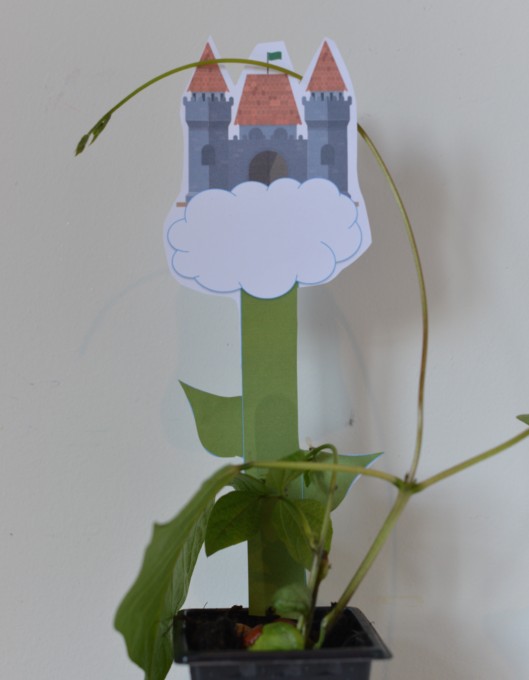
This one is a bit obvious but had to be included. Grow a bean plant in a jar so you can see the roots, or in a pot and watch it grow!
Help Jack escape the giant with a zip line
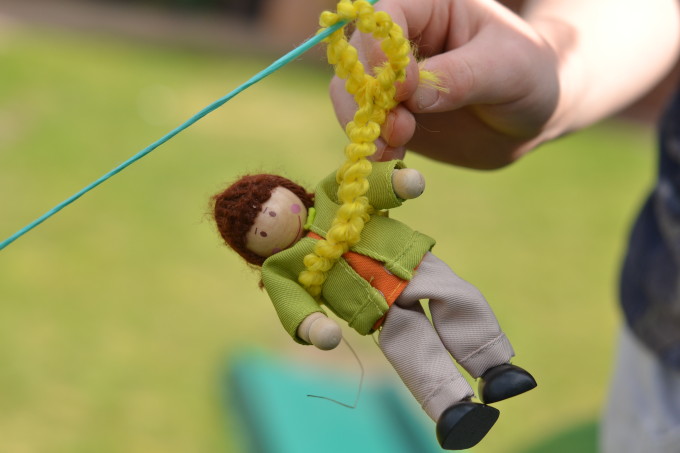
Jack could’ve escaped the giant much faster with a zip line from the top of the beanstalk to the ground. You can build a simple garden zip line for a small toy figure and learn about friction and the effect of gradient on speed.
There are more instructions in the linked post, but experiment with different harnesses using pipe cleaners or straws. Another idea is to use different types of string for the zip line itself. Rough string should make a slower zip line than smooth string as there is more friction.
Parachute for Jack
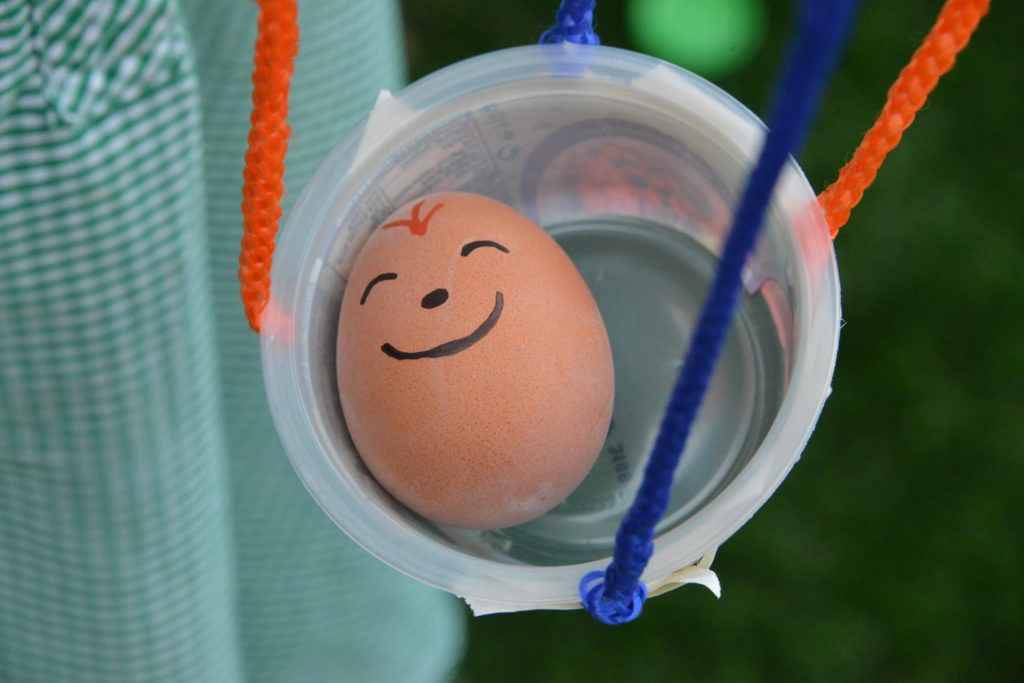
Another way for Jack to escape could be with a parachute. Jack could be a boiled egg so you can see if he lands safely without cracking!
Build a Beanstalk
Build a beanstalk with toilet rolls, DUPLO bricks, LEGO or other blocks! Who can build the tallest?
Make a Chicken Life Cycle
Learn about the life cycle of a chicken with a fun sensory bin or by making a paper plate life cycle.
Make a Harp
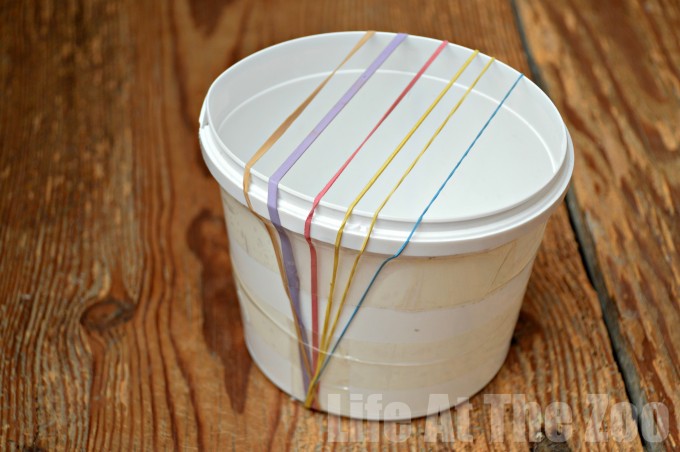
Use a cardboard box and elastic bands to make your own harp! Experiment using different thicknesses of elastic bands to see how it changes the pitch of the sound made.
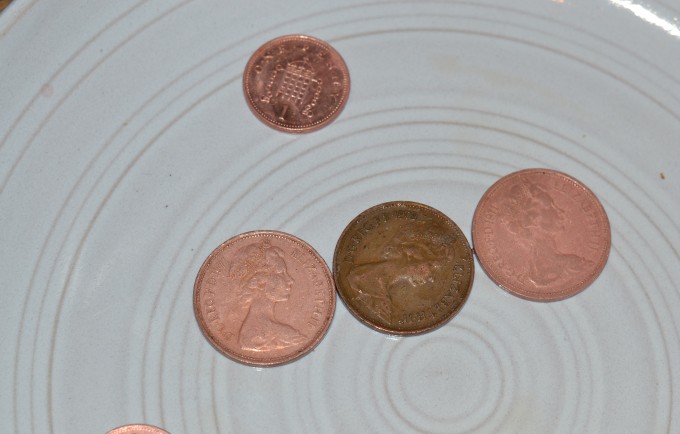
Clean the Giant’s Money
Did you know you can clean coins using vinegar and salt?
More Jack and the Beanstalk learning
Count up the beanstalk with Rainy Day Mum.
The imagination Tree has a gorgeous Jack and the Beanstalk story telling bag.
Fantastic Fun and Learning has a lovely Jack and the Beanstalk sensory bin!

The post Jack and the Beanstalk Experiments appeared first on Science Experiments for Kids.