
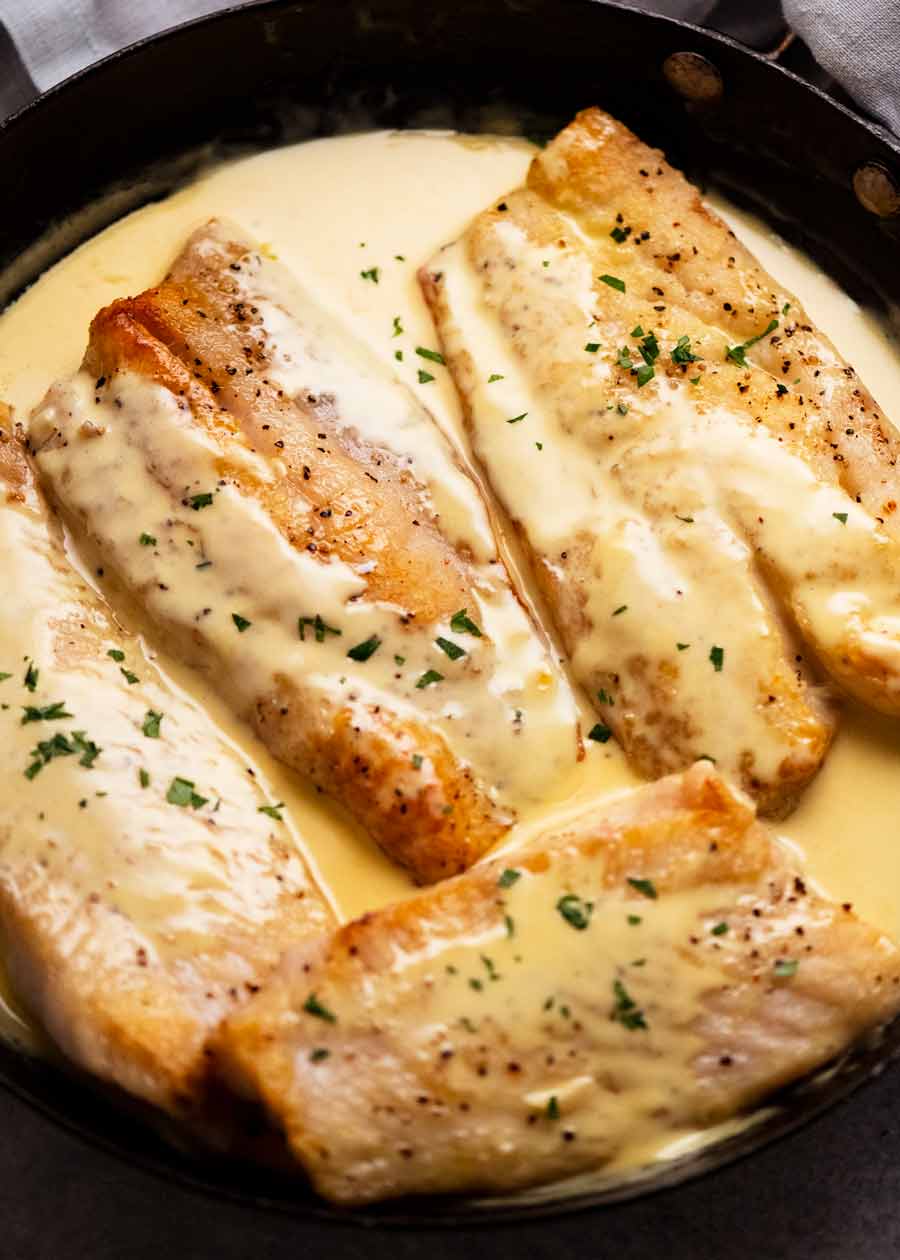
Here’s a simple yet totally fine-dining worthy elegant White Wine Sauce for fish. I’ve served it with snapper but it will go with just about any fish that can be pan fried. But don’t limit yourself to just fish! This creamy wine sauce will go beautifully with chicken, pork, and crustaceans (shrimp/prawns, lobster, crab).
White wine sauce for fish
This is a beautiful sauce for fish that looks and tastes elegant and sophisticated, but is actually incredibly easy to make (you’ll be shocked). I exaggerate not when I say it’s fine-dining worthy. And in fact, we do deploy a simple little restaurant technique to make this wine sauce beautifully glossy with a luxurious mouthfeel.
So, I feel very justified standing by my restaurant stance!! 
Ingredients in white wine sauce for fish
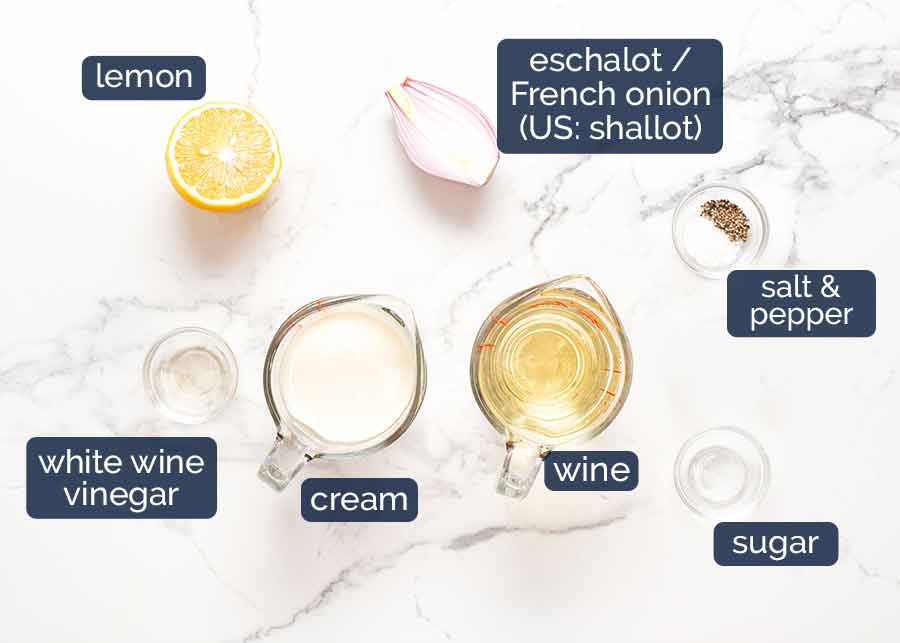
Here’s what you need to make the creamy white wine sauce:
-
White wine – Any white wine that’s not too woody or sweet will work great here. Chardonnay in particular adds really good flavour. Sub low sodium chicken stock/broth for a non alcoholic version.
Don’t use an expensive wine. The flavour and aroma that you pay for is largely lost during cooking. It’s pretty well documented these days by notable food authorities (such as New York Times Cooking) that you do not need to use expensive wines for cooking.
Eschalots – Also known as French onions, and are called “shallots” in the US. They look like baby onions, but have purple-skinned flesh, are finer and sweeter. Not to be confused with what some people in Australia call “shallots” ie the long green onions.
Cream – Use thickened / heavy cream here as it will make the sauce thicker.
COLD butter – This is used to thicken the sauce (emulsifies it) and to make it nice and shiny so it looks as luxurious as it tastes. More on this simple restaurant-y technique in the steps section below.
Lemon and white wine vinegar – For a touch of tang. Lemon brings acidity with freshness, white wine vinegar brings tang with a bit more depth of flavour to it. If you’re missing one, double up on the other.
Sugar – Just a pinch, to round off the sauce.
What to use this white wine sauce for
Today, I’m sharing this white wine sauce paired with fish. But this sauce would also be terrific with crustaceans (shrimp/prawns, lobster/crayfish, crab), poultry (pan seared chicken breast or thighs just sprinkled with salt and pepper), or pork chops (I’d opt for fairly lean ones).
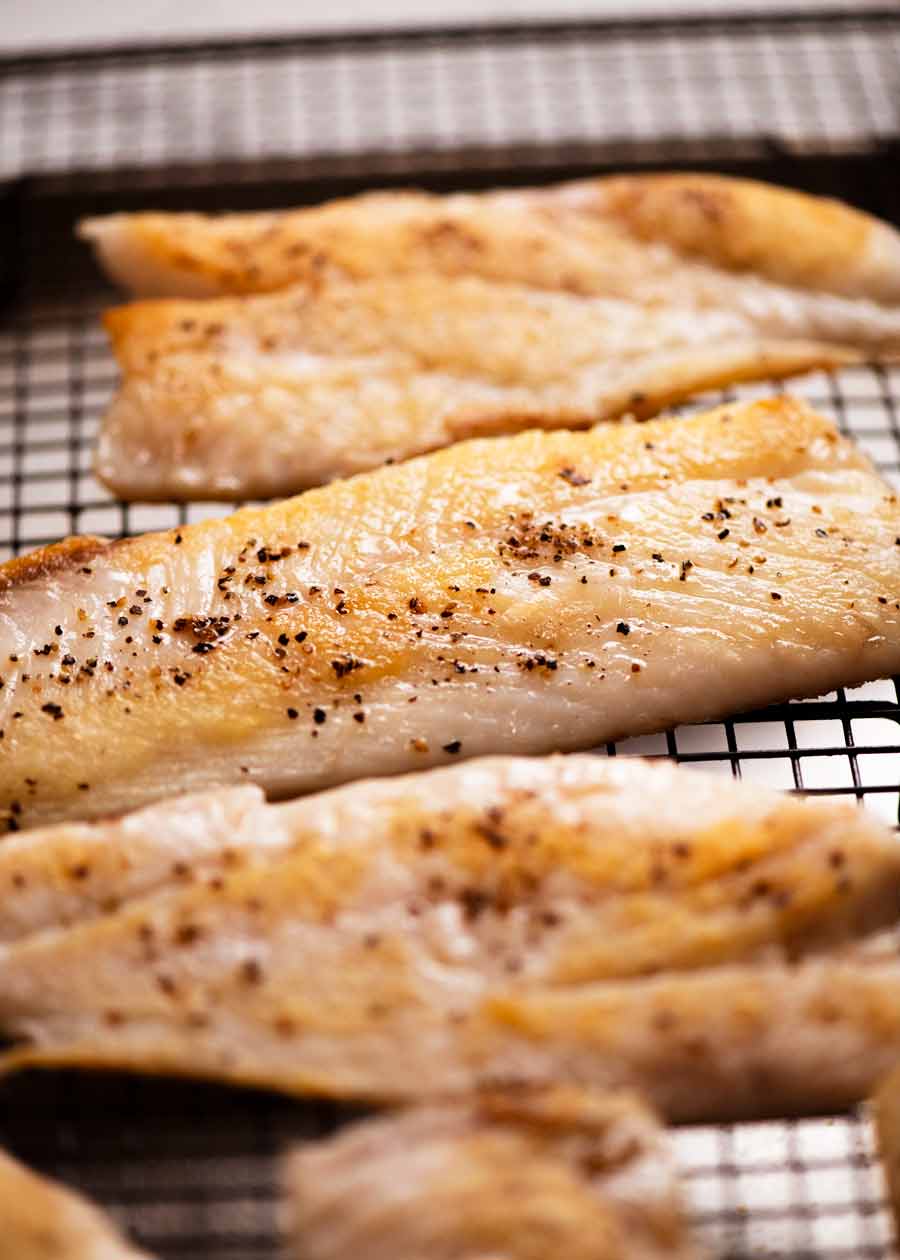
Fish for white wine sauce
The fish pictured throughout this post is snapper, but this sauce can be used for any mild flavoured fish. See below for a list of suggested fish, and fish I don’t recommend serving with this sauce.
Snapper is a very popular fish here in Australia, beloved for the mild, sweet, delicate flavour, not fishy at all. The flesh is medium textured and moist, and they are easy to cook evenly because the fillets are flat with even thickness (as opposed to, say, salmon, when some fillets have a very thick “hump”.
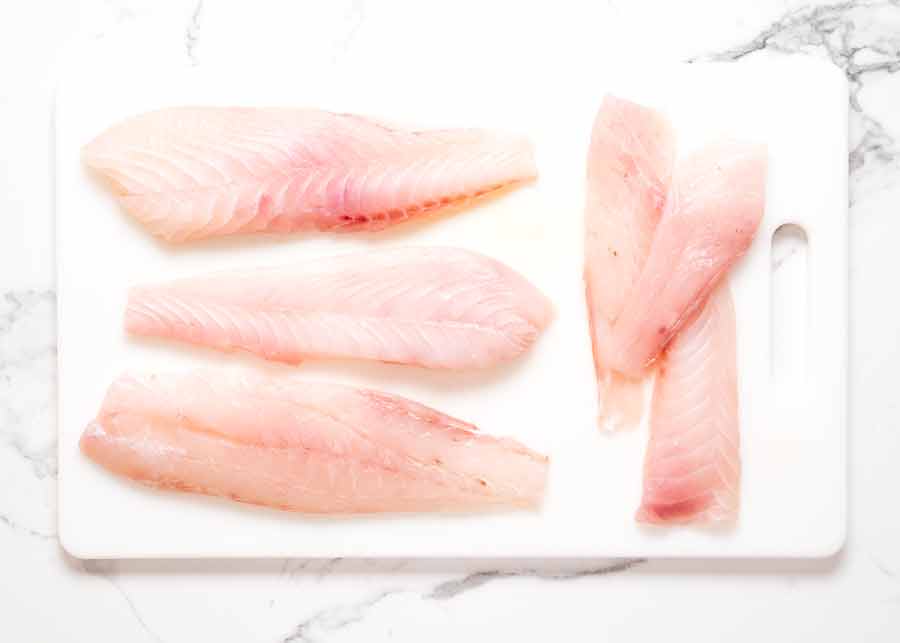
Best fish for white wine sauce
Any firm white fish fillets suitable for pan frying will work here. Even salmon will work great! Here’s are suggestions for common fish in my primary readership countries that is ideal for these fish cakes:
Australia: Barramundi, Blue eye cod / trevalla, Basa, Bream, Cod, Flathead, Flounder, Jewfish, John Dory, Ling, Monkfish / Stargazer, Ocean perch, Ocean trout, Orange roughy, Salmon, Whiting.
US: Above and below listed, plus Alaskan pollock, Catfish, Flounder, Halibut, Pangasius, Tilapia
UK: Above listed, plus Dover sole, Haddock, Hake, Halibut, Pollack, Sea bass, Turbot.
Fish to avoid
I recommend avoiding:
Fish that dry out easily when cooked – Like swordfish, tuna, bonito, kingfish, marlin. Unless you’re extremely careful they can become dry inside. I feel these fish are (mostly) better in raw/rare form such as Ceviche, Poke Bowls, Tartare.
Oily, “fishy-fish – Like mackerels, mullet and sardines. While it will work just fine, it’s not so common to serve those types of fish with creamy sauces like this.
How to make white wine sauce
These same steps apply whether using fish, chicken or pork. Keep the cooked protein warm in a low oven at 50°C/120°F which you make the sauce.
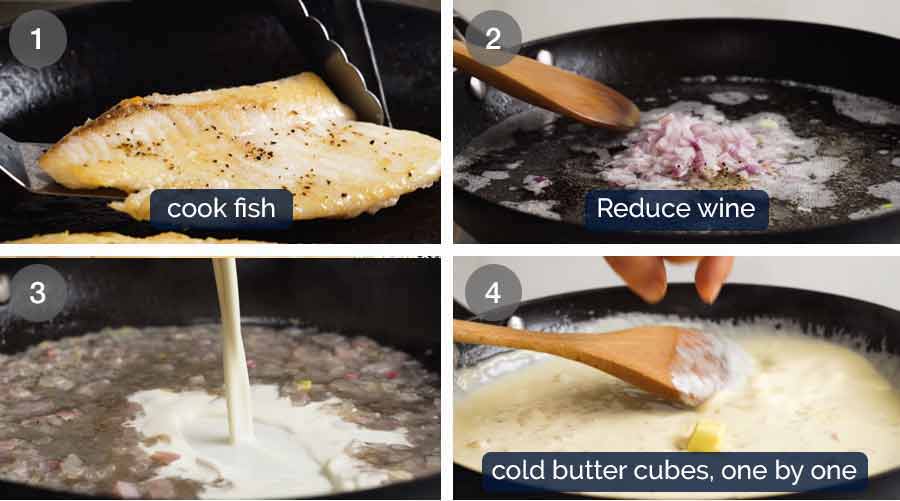
-
Cook fish – Sprinkle fish with salt and pepper, then cook in a non stick pan. For a 150g / 5oz white fish fillet (I’m using snapper) that is 2 cm / 4/5″ at the thickest point, this will take 2 minutes on each side.
Cook in batches if necessary. Don’t crowd the pan else it will stew instead of sear! I cook the pictured snapper in two batches.
Target an internal temperature of 55°C / 131°F at the thickest point – this is when the fish is fully cooked but optimal juiciness. If you don’t have a meat thermometer (why not?? It’s the 20th century! Here’s mine), check to see if the flesh flakes easily.
Keep warm – Remove fish from the skillet and keep warm in a low 50°C/120°F oven. Because the temperature is lower than the internal temperature of the cooked fish, it won’t cook any further.
Reduce wine – Discard any far remaining the skillet but don’t wipe it clean, just pour the fat out. Then, still on high heat, add the wine, lemon, vinegar, salt, pepper and eschalot. Bring it to a simmer then let it simmer rapidly for 3 minutes or until it reduces by half. The exact time will differ depending on the size and heat retention of your skillet, strength of stove.
Simmer cream – Once the wine is reduced, add the cream and simmer for a couple of minutes.
-
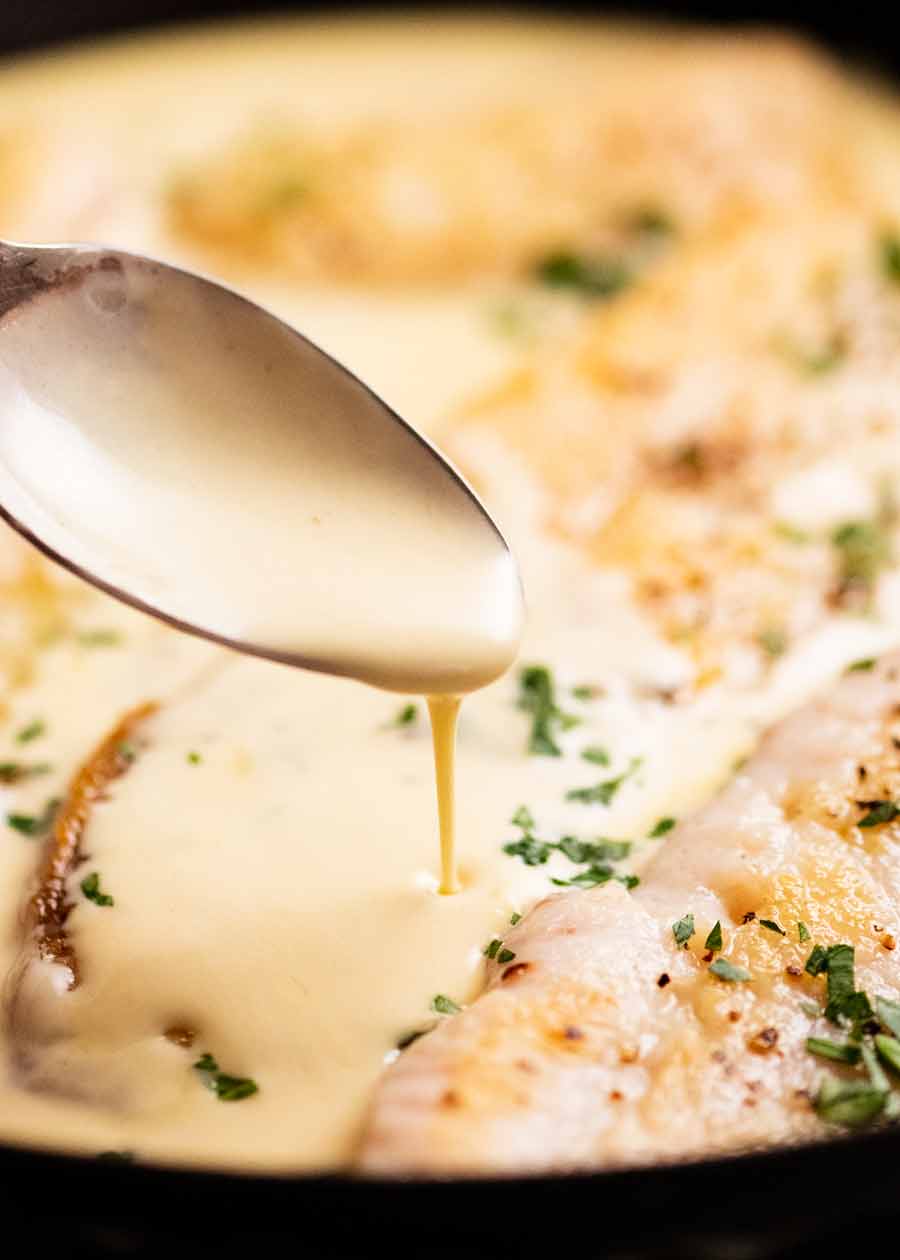
Finish sauce with butter – Reduce the stove heat to low. Then add the butter cubes in one by one while stirring constantly. Once all the butter is incorporated, the sauce will be thicker and satiny.
What we’re doing here is finishing the sauce using a fancy sounding restaurant technique called monter au beurre (it’s French) that’s a quick easy way to make sauces shiny and luxurious. The idea here is that the butter softens to emulsify and thicken the sauce, rather than melting and splitting so the butter fat separates (which is clear).
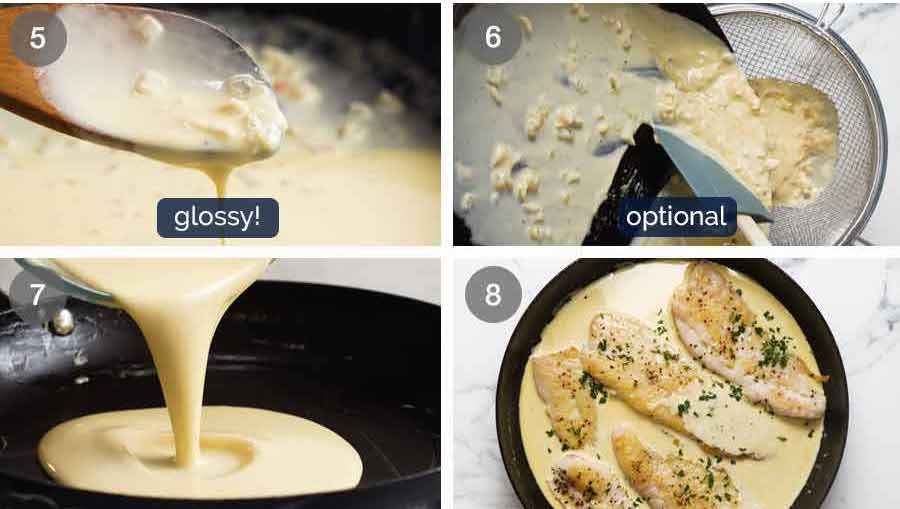
Glossy! Here’s what the sauce will look like when the butter is incorporated. Shiny and glossy!
-
Straining (OPTIONAL) – If you want your sauce to be silky smooth, then strain the sauce to remove the eschalots. This step is purely optional, for fussy people like me who wanted very specifically to share a simple yet elegant looking sauce!
The eschalot bits are cooked and soft so for everyday purposes purposes, I would not bother straining.
Back into pan – Then once strained, pour the sauce back into the pan.
-
Fish in sauce (optional) – Return the fish into the sauce for 30 seconds before transferring to serving plates. This is yet another optional step! I like to do this because it gives the dish a chance for the flavours to meld together before serving.
But really, you could be a normal person and just put the fish straight onto a plate then spoon the sauce over, sprinkled with parsley if desired (one last optional step!).
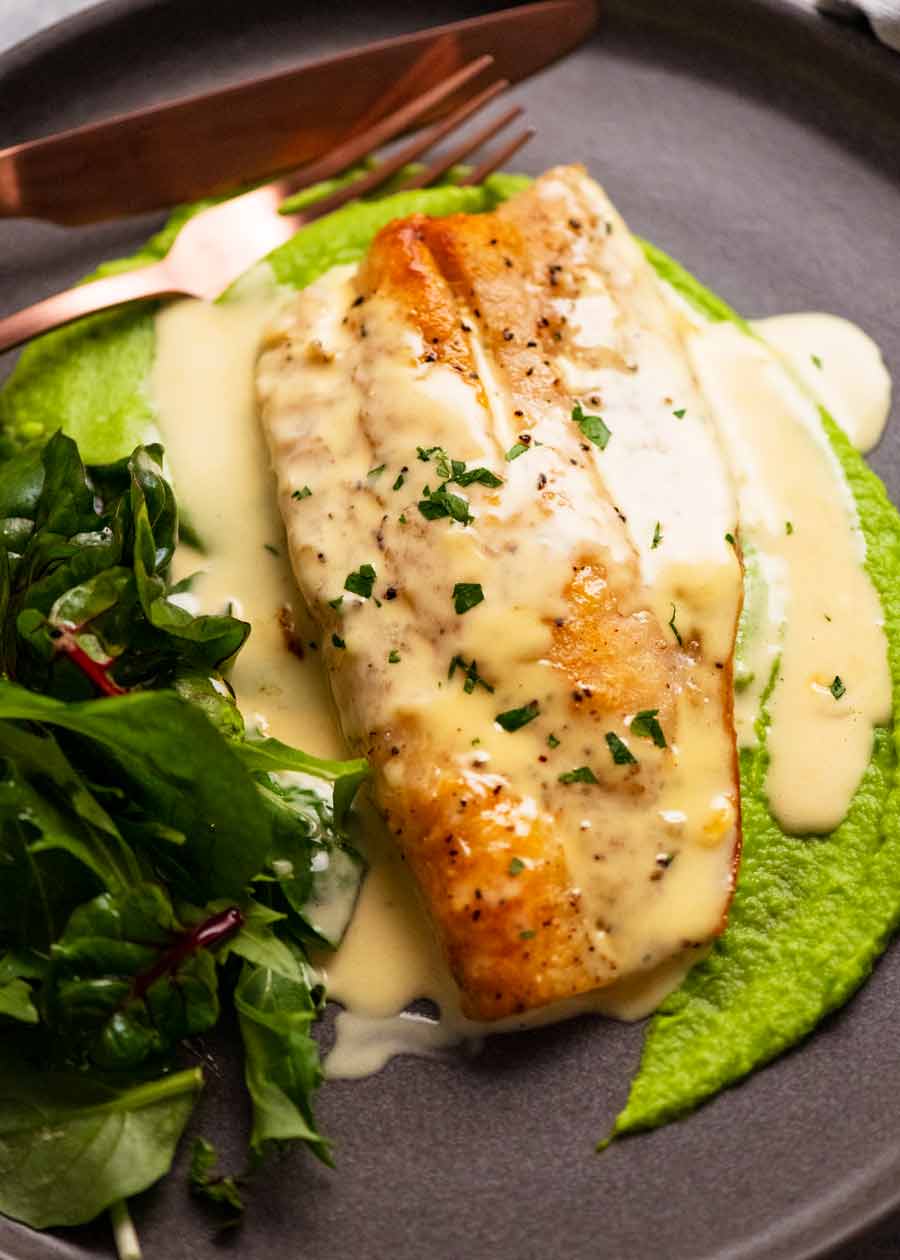
Sides for Fish with White Wine Sauce
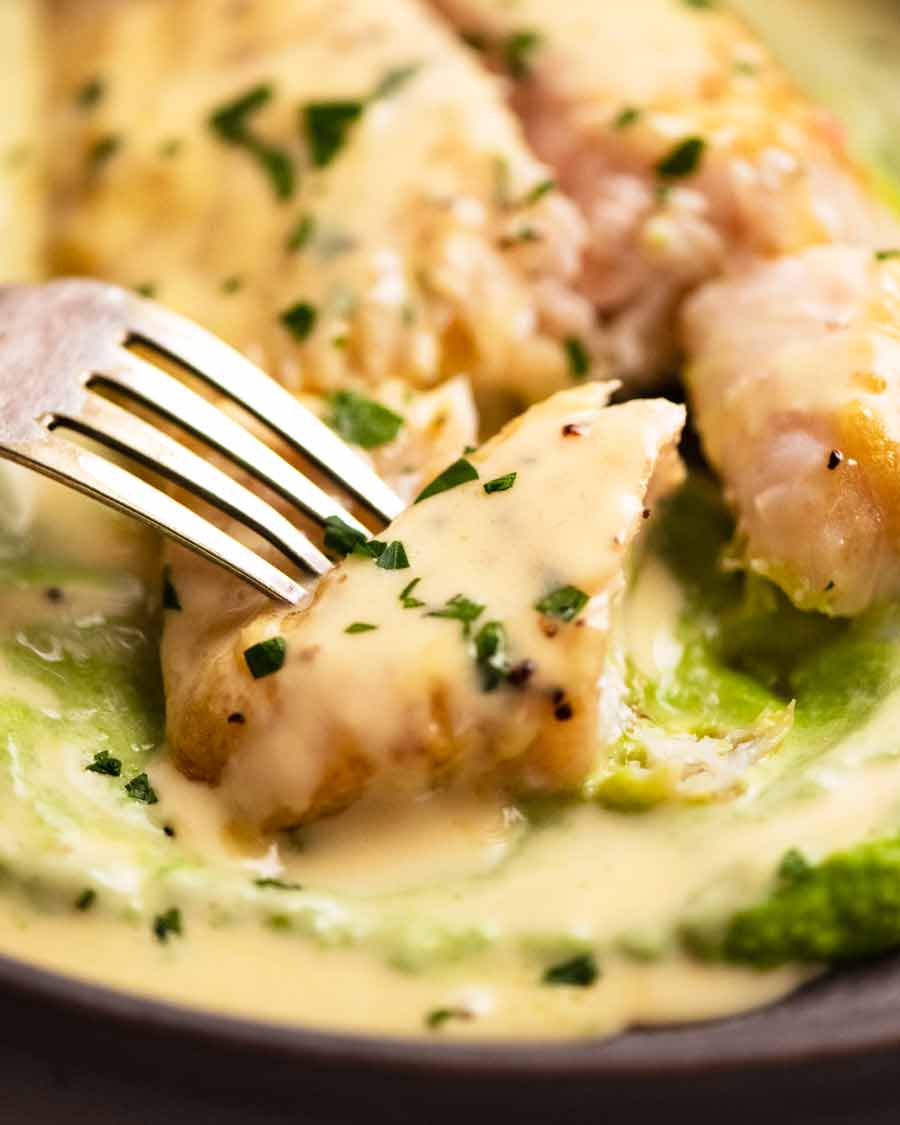
Today’s dish is pictured with a dazzling green pea puree which I think makes for a striking contrast again the white sauce, golden fish and YES I deliberately chose a dark coloured plate to make everything pop!
I know I’m all about rustic food and share platters, casually littered with garnishes. But sometimes I do actually think about presentation!
Plus, that pea puree? It’s ridiculously good. It starts with eschalots and garlic cooked in butter before simmering peas in stock, then pureeing until smooth. Try it once, and you will forever turn your nose up at basic recipes that call for blitzed plain boiled peas!
Plus, it’s a nice change from the usual mash, no?  – Nagi x
PS In case you’re going low carb – here’s my Cauliflower Mash. It will go very well with this dish!
Watch how to make it
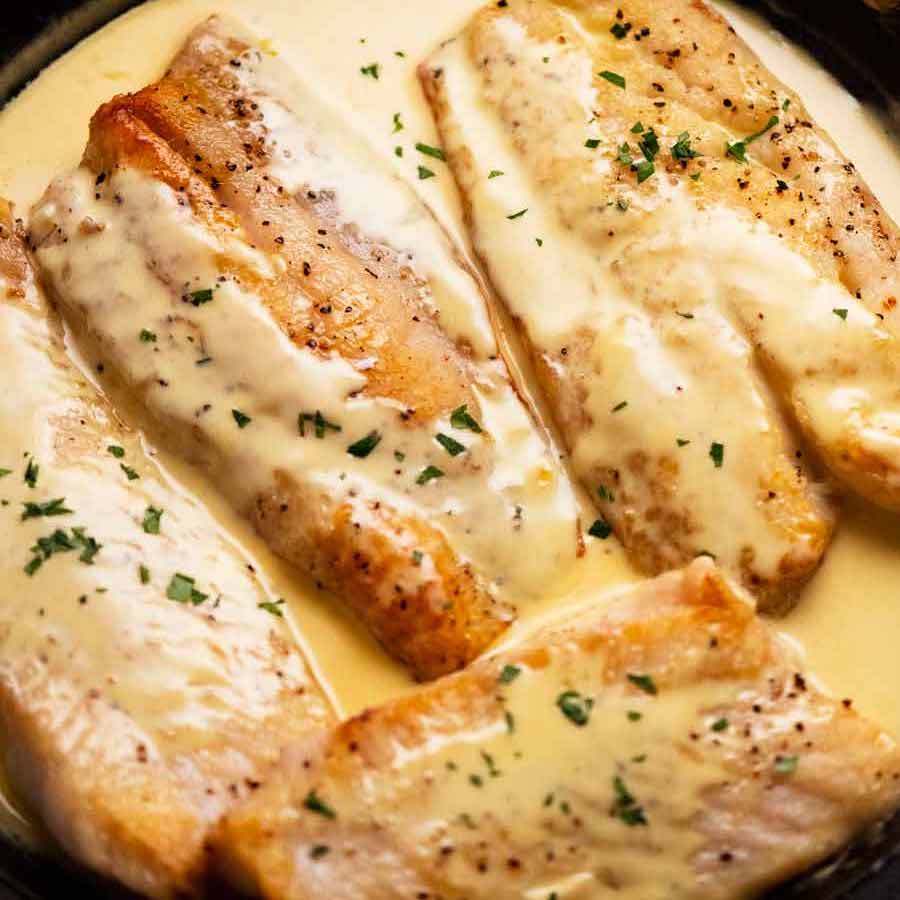
Fish with White Wine Sauce
Ingredients
Pan seared fish:
- 4 x 150g / 5oz white fish fillets , skinless, boneless (I used snapper, Note 1)
- 1/2 tsp salt
- 1/4 tsp pepper
- 2 tbsp extra virgin olive oil
White wine sauce:
- 1 eschalot , small, finely chopped (~1 1/2 tbs, Note 2)
- 1 1/4 cups white wine , dry, not sweet or too woody (chardonnay is especially good, Note 3)
- 1 tsp lemon juice (sub white wine vinegar)
- 1 tsp white wine vinegar (sub more lemon)
- 1/8 tsp salt
- 1 pinch pepper
- 1 pinch white sugar
- 1 cup thickened/heavy cream
- 30 g / 2 tbsp unsalted butter , cold, cut into 1cm / 1/3″ cubes
- Garnish , optional:
- 2 tsp finely chopped parsley (or chives)
Instructions
Cook fish:
- Preheat oven to 50°C/120°F. Place rack over a tray.
- Season fish: Sprinkle fish with salt and pepper.
- Cook fish: Heat oil in a large non stick skillet over medium high heat. Cook fish in two batches until golden, 2 minutes on each side, or until the internal temperature is 55°C/131°F. (Note 4)
- Keep warm: Place fish on rack, and place in the oven to keep warm.
White wine sauce:
- Discard oil: Tip out excess oil from the skillet but don't wipe clean.
- Reduce wine: Add escholot, white wine, lemon juice, vinegar, salt, pepper, sugar to the pan. Bring to simmer (still on medium high) and reduce by half (~3 minutes).
- Simmer cream: Add cream, simmer for 2 minutes.
- Finish with butter: Turn heat to low and add butter one cube at a time while mixing with wooden spoon. Once all the butter is incorporated, the sauce should be thickened, satiny and beautifully glossy.
- Optional strain: Strain the sauce through a sieve (discard eschalot), then pour it back into the pan.
- Fish in sauce: Place fish back into the pan in the sauce. Spoon some sauce over the fish, leave for 30 seconds.
- Serve: Transfer fish onto serving plates. Spoon sauce over each fish, sprinkled with parsley if desired. Pictured with a side of pea puree (great colour splash!).
Notes
Life of Dozer
When he refused to leave the pet shop and I refused to cave and go in to fetch him. So I pretended I was about to drive off without him. He dashed out quick smart!

The post Fish with White Wine Sauce appeared first on RecipeTin Eats.